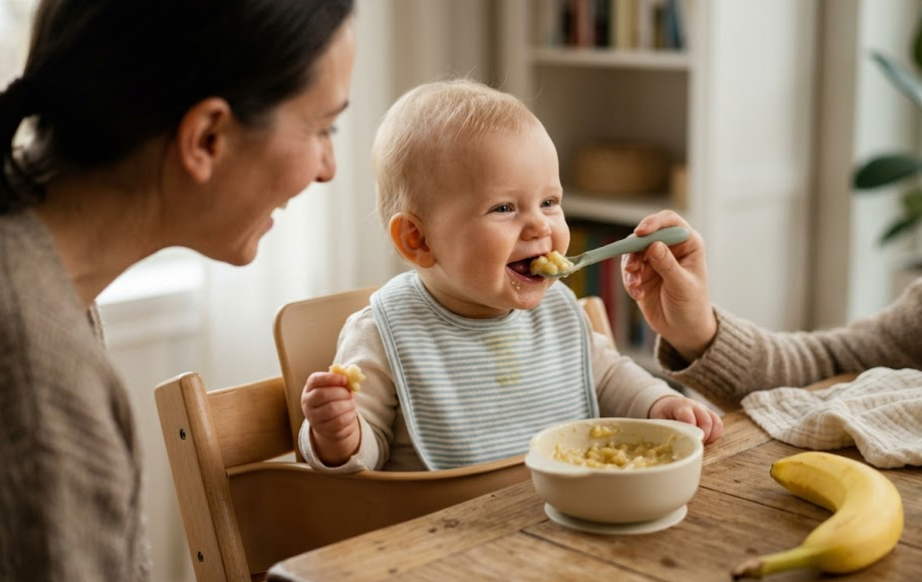
Banana is one of the most commonly recommended first foods for infants after six months of age. It is soft, naturally sweet, and easy to digest when prepared correctly. Parents often choose it for early feeding because it supports growth, energy needs, and digestive comfort during the first year of life.
Benefits of Banana for Babies Under 1 year
Banana provides multiple nutritional advantages for infants under one year of age when introduced at the right stage of weaning. It supports healthy weight gain, stable energy levels, and smooth digestion. Banana also offers essential micronutrients that assist brain development and muscle growth during rapid infancy development.
One major benefit is quick energy supply. Banana contains natural carbohydrates that are easily converted into energy, which supports active growth phases. Another benefit is digestive support because banana texture is soft and fiber rich. It also helps regulate bowel movements in infants. In addition, banana supports nutrient absorption and strengthens early immunity when included as part of a balanced weaning diet.
Nutritional Value of Banana for Infants
Banana is nutrient dense and provides essential vitamins and minerals required during infancy. It is easy to digest and does not overload the infant digestive system when served in appropriate portions.
Key vitamins and minerals
Banana contains potassium, vitamin B6, vitamin C, and small amounts of magnesium. Potassium supports heart function and muscle coordination. Vitamin B6 contributes to brain development and nervous system function. Vitamin C supports immunity and helps the body absorb iron from other foods.
Energy contribution
Banana provides natural glucose, fructose, and sucrose. These natural sugars supply steady energy for infants. This energy is important during early crawling, sitting, and physical development stages. Unlike processed sugar, banana sugars are naturally balanced with fiber.
Safe Age and Introduction Guidelines
Banana should be introduced after six months of age when infants begin solid foods. Pediatric feeding guidelines recommend starting with single ingredient foods to monitor tolerance and digestion.
Starting age
Most infants can safely consume banana after completing six months. At this stage, the digestive system becomes more capable of handling soft solids. Banana is often one of the first fruits introduced due to its mild nature.
Texture and serving forms
Banana should be served in mashed or pureed form for younger infants. The texture must be smooth to prevent choking risk. As the infant grows, slightly thicker textures can be introduced. By 8 to 10 months, small soft pieces can be offered under supervision.
Digestive Benefits of Banana
Banana plays a significant role in supporting infant digestion. It is gentle on the stomach and helps regulate bowel movements when used appropriately.
Fiber role
Banana contains soluble fiber which supports healthy digestion. This fiber helps soften stools and improves bowel regularity. It is especially useful for infants experiencing mild constipation during dietary transitions.
Stool regulation support
Banana can support both constipation and mild diarrhea depending on ripeness. Ripe banana helps firm loose stools, while slightly less ripe banana may support constipation relief due to fiber content. Balance is important to avoid overfeeding.
Brain and Growth Support
Banana supports early brain development and physical growth due to its nutrient profile. Infancy is a critical period for cognitive and muscular development.
Potassium and brain function
Potassium in banana supports nerve signaling and brain communication. These processes are essential for learning, sensory development, and early coordination skills in infants.
Muscle development
Magnesium and potassium support muscle contraction and movement. These nutrients help infants develop motor skills such as crawling, standing, and grasping objects.
How to Serve Banana to Infants
Proper preparation of banana is essential for safety and nutrient absorption. The serving method depends on the infant’s age and developmental stage.
Mashed banana
Mashed banana is the most common serving method for infants aged six to eight months. It should be smooth with no lumps. A spoon or fork can be used to achieve a soft consistency.
Banana puree combinations
Banana can be mixed with breast milk, formula, or other fruits like apple or pear. These combinations improve taste and increase nutrient variety. The mixture should remain simple and free from added sugar or salt.
Finger food stage
After eight months, banana can be cut into small soft pieces. These pieces should be easy to grasp and chew. This method supports self feeding skills and motor development.
Precautions and Safety Tips
Banana is generally safe, but proper precautions are necessary to ensure infant health and safety during feeding.
Allergy risk
Banana allergy is rare in infants. However, any new food should be introduced alone for three days to monitor reactions such as rash, vomiting, or discomfort.
Overfeeding and sugar intake
Banana contains natural sugars. Excess consumption may lead to unnecessary calorie intake or digestive imbalance. Portion control is important, especially in daily feeding routines.
FAQs
Can banana be given daily to a baby under one year
Banana can be given daily in small portions as part of a balanced diet, depending on tolerance and variety of other foods.
Does banana help with baby weight gain
Banana supports healthy weight gain due to its carbohydrate content and calorie density when combined with other nutrient rich foods.
Can banana cause constipation in infants
Banana may cause constipation in some cases if overripe or consumed in excess, but balanced portions usually support digestion.
Is raw banana safe for infants
Raw banana is not recommended for infants because it is harder to digest compared to fully ripe banana.
Conclusion
Banana remains one of the most practical first foods for infants due to its soft texture and natural nutrient profile. It supports digestion, energy needs, and early development when introduced correctly. Consistent portion control and proper preparation ensure safe consumption during the first year of life.