Building a quadcopter at home is a practical electronics and engineering project that combines mechanics, programming, and remote control systems. It helps in understanding flight control, motor coordination, and stability systems. With the right components and careful assembly, a functional quadcopter can be built even by beginners with basic technical knowledge.
How to Make a Quadcopter at Home?
To make a quadcopter at home, you need a structured approach that includes selecting components, assembling the frame, wiring electronics, and programming the flight controller. Each step must be completed carefully to ensure stable flight and safety.
Start by gathering the required parts. You need a quadcopter frame, four brushless motors, four electronic speed controllers, a flight controller, a lithium polymer battery, propellers, a transmitter, and a receiver. These components work together to control lift, direction, and stability.
Begin assembly by fixing the motors onto the frame arms. Attach two motors in clockwise rotation and two in counterclockwise rotation. This balance prevents uncontrolled spinning during flight. Secure all motors tightly using screws.
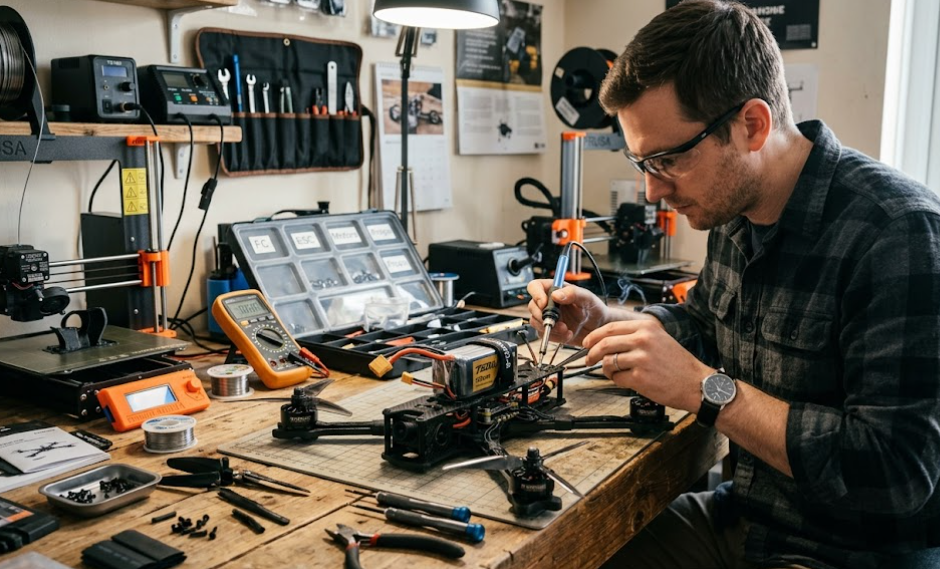
Next, install the electronic speed controllers on each arm. Connect each ESC to its respective motor. Then connect all ESCs to the flight controller. This controller acts as the brain of the quadcopter and stabilizes flight movement.
Mount the flight controller at the center of the frame. Ensure it is firmly fixed and aligned properly to avoid sensor errors. After that, connect the receiver to the flight controller for remote communication.
Attach the battery at the center or bottom of the frame for balance. Connect the battery to the power distribution system. Double-check all wiring connections before powering the system.
Install propellers only after testing motor directions. Incorrect propeller placement can cause instability or crashes. Once everything is connected, calibrate the flight controller using its software.
Perform a ground test by slowly increasing throttle. Check if all motors respond equally. After successful testing, the quadcopter is ready for a controlled flight test in an open area.
Components Required for a Quadcopter Build
A quadcopter depends on several essential electronic and mechanical parts. Each component plays a specific role in ensuring smooth flight performance.
Frame Structure
The frame holds all components together. Lightweight materials like carbon fiber or plastic are preferred for stability and reduced weight.
Motors and Propellers
Brushless motors provide the thrust needed for flight. Propellers convert motor rotation into lift and airflow control.
Flight Controller System
The flight controller manages balance, direction, and stabilization. It processes sensor data and adjusts motor speed automatically.
Power Supply System
A lithium polymer battery provides high energy output. It must match the voltage requirements of the motors and controllers.
Step-by-Step Assembly Process
Building a quadcopter requires a methodical assembly process to ensure proper functionality and safety.
Frame Setup
Begin by assembling the frame structure. Tighten all joints and ensure the arms are evenly aligned. A stable frame reduces vibration during flight.
Motor Installation
Install motors on each arm. Ensure correct rotation direction is assigned. Opposite diagonal motors must rotate in the same direction for balance.
Wiring Connections
Connect ESCs to motors and then to the flight controller. Organize wires neatly to avoid interference with propellers.
Battery Integration
Secure the battery using straps. Connect it to the power distribution board carefully. Avoid loose connections to prevent power failure.
Programming and Calibration
Flight control software is necessary to ensure stable performance and accurate movement response.
Flight Controller Configuration
Connect the flight controller to a computer. Install the required software and configure basic settings such as motor order and orientation.
Sensor Calibration
Calibrate gyroscope and accelerometer sensors. This step ensures the quadcopter maintains balance during hovering and movement.
Remote Control Setup
Pair the transmitter with the receiver. Test all control inputs including throttle, yaw, pitch, and roll.
Safety Tips for Beginners
Safety is important when working with high-speed rotating components and lithium batteries.
Propeller Safety
Always remove propellers during initial setup and testing. This prevents accidental injury during motor checks.
Battery Handling
Avoid overcharging or puncturing lithium polymer batteries. Store them in a fire-safe container when not in use.
Testing Environment
Test the quadcopter in open outdoor spaces. Avoid indoor testing due to limited space and safety risks.
Common Mistakes to Avoid
Many beginners face issues due to incorrect assembly or calibration errors.
Incorrect Motor Direction
Incorrect motor rotation leads to instability. Always verify motor direction before installing propellers.
Poor Wiring Management
Loose or incorrect wiring can cause system failure. Keep wiring organized and secured.
Skipping Calibration
Skipping flight controller calibration results in unstable flight behavior. Calibration is mandatory before flying.
FAQ
What is the easiest quadcopter frame for beginners?
A basic X-shaped plastic frame is easiest to assemble and suitable for first-time builders.
How long does it take to build a quadcopter at home?
A beginner typically requires 6 to 12 hours depending on experience and preparation.
Can a quadcopter fly without GPS?
Yes, basic quadcopters can fly without GPS using manual control and stabilization sensors.
What battery is best for a quadcopter?
A lithium polymer battery with high discharge rate is commonly used for stable performance.
Is coding required for a quadcopter?
Basic configuration is required, but advanced coding is optional depending on the flight controller.
Conclusion
Building a quadcopter at home combines electronics knowledge, mechanical assembly, and control system understanding. Each component must be selected and installed with precision for stable flight performance. The process strengthens technical skills and improves problem-solving ability. Careful testing and calibration ensure safe operation and long-term reliability of the final quadcopter system.