
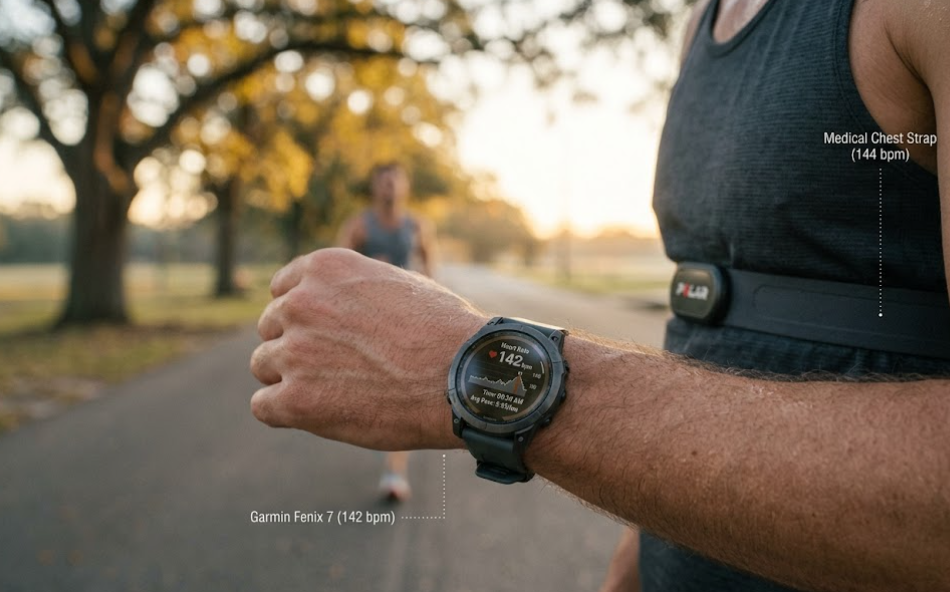
Smartwatches measure heart rate using optical sensors that estimate blood flow under the skin. The reading is usually close to real values but not perfectly exact. Accuracy depends on device quality, body movement, skin conditions, and how tightly the watch is worn on the wrist.
Do Smartwatches Tell Exact Heart Rate?
Smartwatches do not always show exact heart rate. They provide an estimated value based on light sensors that track blood flow changes in the wrist. The reading is generally reliable for daily fitness tracking, but it can differ from medical equipment during intense movement or irregular heart rhythms.
Most modern smartwatches are accurate within a small range during rest and light activity. However, the difference becomes more noticeable during fast exercise or when the watch is not positioned correctly. Therefore, smartwatch heart rate data should be used for fitness guidance rather than medical diagnosis.
How Smartwatch Heart Rate Sensors Work
Smartwatch heart rate tracking depends on optical technology that detects changes in blood volume under the skin.
Optical Sensor Technology
Smartwatches use green LED lights and photodiodes to measure blood flow. When the heart pumps blood, the amount of light absorbed by the skin changes. The sensor reads these changes to estimate heart rate in beats per minute.
This method is known as photoplethysmography. It works continuously while the watch is worn. It is effective for general monitoring but sensitive to movement and placement.
Data Processing Algorithms
Smartwatches use built in algorithms to convert raw sensor signals into heart rate readings. These algorithms filter noise caused by motion, sweat, and light interference.
The system compares multiple readings over time to produce a stable average. This improves consistency but can delay real time accuracy during sudden changes in heart rate.
Accuracy Level of Smartwatch Heart Rate Tracking
The accuracy of smartwatch heart rate measurement varies based on activity level and device quality.
Accuracy at Rest
Smartwatches are most accurate when the user is resting. In this state, the body is still and blood flow is stable. Many devices show results close to medical grade monitors during rest.
This makes smartwatches useful for checking resting heart rate trends over time.
Accuracy During Exercise
During exercise, accuracy can decrease due to wrist movement and sweat. Rapid motion creates signal noise that affects sensor readings.
High intensity workouts such as running or weight training may show temporary differences of several beats per minute compared to chest strap monitors.
Comparison With Medical Devices
Medical devices like electrocardiogram machines measure electrical signals of the heart directly. Smartwatches measure blood flow changes instead.
Because of this difference, smartwatches are not considered medical diagnostic tools. They are designed for fitness tracking and general wellness monitoring.
Factors That Affect Smartwatch Accuracy
Several factors influence how accurately a smartwatch measures heart rate.
Fit and Placement on Wrist
A loose smartwatch allows light interference from outside sources. This reduces measurement stability. A snug fit improves contact between the sensor and skin, which increases accuracy.
The sensor should sit flat against the wrist bone area for best results.
Skin Conditions and Tone
Skin characteristics affect light absorption. Tattoos, thick body hair, and dark ink patterns can reduce sensor accuracy.
Skin tone may also influence readings because optical sensors depend on light reflection differences.
Movement and Activity Level
Fast arm movements create motion noise. Activities such as tennis, weightlifting, or cycling can reduce accuracy.
Still activities such as walking or sitting produce more stable readings.
Environmental Light Interference
Bright sunlight or strong artificial light can interfere with optical sensors. This can cause temporary fluctuations in readings.
Wearing the watch tightly helps reduce this effect.
When Smartwatch Heart Rate Is Most Reliable
Smartwatches perform best in specific conditions where movement and interference are low.
Resting Heart Rate Tracking
Resting heart rate measurement is one of the most reliable smartwatch functions. It helps track fitness level and cardiovascular trends over time.
Many users monitor resting heart rate in the morning for consistency.
Steady Exercise Conditions
Steady activities such as treadmill walking or cycling at constant speed produce more accurate readings.
In these conditions, heart rate changes gradually, which allows sensors to maintain stability.
Long Term Health Trends
Smartwatches are useful for observing long term heart rate patterns. Even if single readings vary slightly, trends over weeks remain meaningful.
This helps identify changes in fitness level or recovery patterns.
Limitations of Smartwatch Heart Rate Monitoring
Smartwatches have clear limitations that users should understand before relying on them fully.
Not a Medical Diagnostic Tool
Smartwatches are not designed for diagnosing heart conditions. They cannot replace medical grade equipment used in hospitals.
Any abnormal reading should be confirmed with professional medical devices.
Delayed Response During Rapid Changes
Heart rate changes may not appear instantly on a smartwatch. The system averages multiple readings to reduce errors.
This creates a slight delay during sudden exercise intensity changes.
Reduced Accuracy in Extreme Conditions
Extreme temperatures, water exposure, and high motion reduce sensor performance.
Swimming and high impact sports may produce less reliable data depending on the device model.
Practical Use of Smartwatch Heart Rate Data
Smartwatch heart rate data is most useful when used for general fitness and wellness tracking.
Users can monitor exercise intensity, recovery time, and stress levels through heart rate patterns. It helps maintain balanced training routines and improves awareness of physical condition.
However, interpretation should focus on trends rather than single readings.
FAQs
Can smartwatches detect heart problems accurately
Smartwatches can show unusual heart rate patterns but cannot confirm medical heart conditions.
Do smartwatches measure heart rate continuously
Most smartwatches track heart rate at regular intervals or continuously during workouts depending on settings.
Why does smartwatch heart rate change quickly
Rapid changes occur due to movement, sensor adjustment, and natural body response during activity.
Is smartwatch heart rate accurate for weight loss tracking
Smartwatch heart rate is useful for estimating workout intensity but not precise calorie measurement.
Can tight watch straps improve accuracy
A properly fitted strap improves sensor contact and increases heart rate reading stability.
Conclusion
Smartwatch heart rate tracking provides practical and useful fitness data for everyday users. The readings are based on optical sensing technology that estimates blood flow changes. Accuracy depends on usage conditions, body movement, and device quality. Smartwatches support health awareness but do not replace clinical heart monitoring systems.